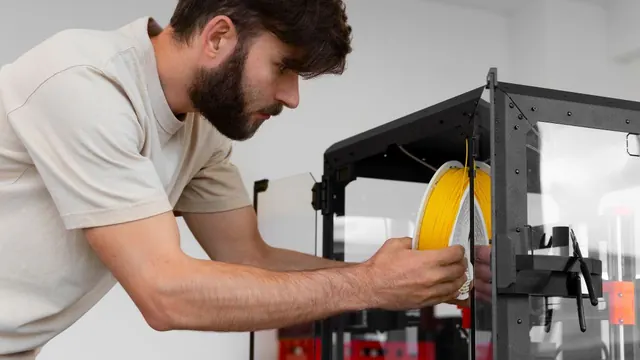
One of the biggest questions in this project was whether 3D printing would be practical for owners who are not engineers or hobbyists.
The simplest workflow can happen from a phone.
With the Bambu Handy workflow described in my guide, a user connects the printer, browses or searches for a model, selects the loaded material, and sends the print from the app. For an existing model such as a soap dish or wall hook, there may be no need to design anything from scratch.
Desktop software adds customization.
Bambu Studio is useful when an owner wants to resize a part, customize room numbers, arrange several parts on the bed, or make other adjustments before printing.
There is still a learning curve.
Owners need to understand basic material choices, nozzle compatibility, and moisture management for filament. Those details matter more as the parts become stronger, larger, or more specialized.